-
 St. Peter
Catholic Church -
-
contact104 W 1st Street
Mansfield, OH 44902
419-524-2572, ext. 2101
OFFICE HOURS:
MONDAY - FRIDAY: 8:30 AM - 5:00 PM
REGISTER WITH ST. PETER -
Where to find us
-
massSATURDAY: 5:00 PM
SUNDAY: 7:30 AM | 9:30 AM | 11:30 AM
MONDAY: 5:30 PM
TUESDAY: 7:00 AM
WEDNESDAY: 7:30 AM | 9:30 AM SCHOOL MASS
THURSDAY: 7:30 AM
FRIDAY: 5:30 PM -
confession
Confessions are heard 30 minutes before every Mass, except for the Wednesday school Mass and Saturday evening Mass, which follow this schedule:
Saturday, 3:00–3:50 PM
No confessions heard on Wednesday
-
expositionWEDNESDAY: 5:30 PM - 9:00 PM
-
-
-
CHURCH HISTORY
-
For over 100 years, the current church building has stood as a symbol of Catholic faith in Mansfield, Ohio.
Its architecture, artwork, and stained glass windows create a sacred atmosphere that inspires prayer and devotion. Today, more than 1,000 parish families are part of St. Peter Parish and help preserve the beauty of this historic church.
To take a detailed tour of our church, click the button below.
For a brief history, continue browsing this page.
-
-
-
The Origins of St. Peter Parish
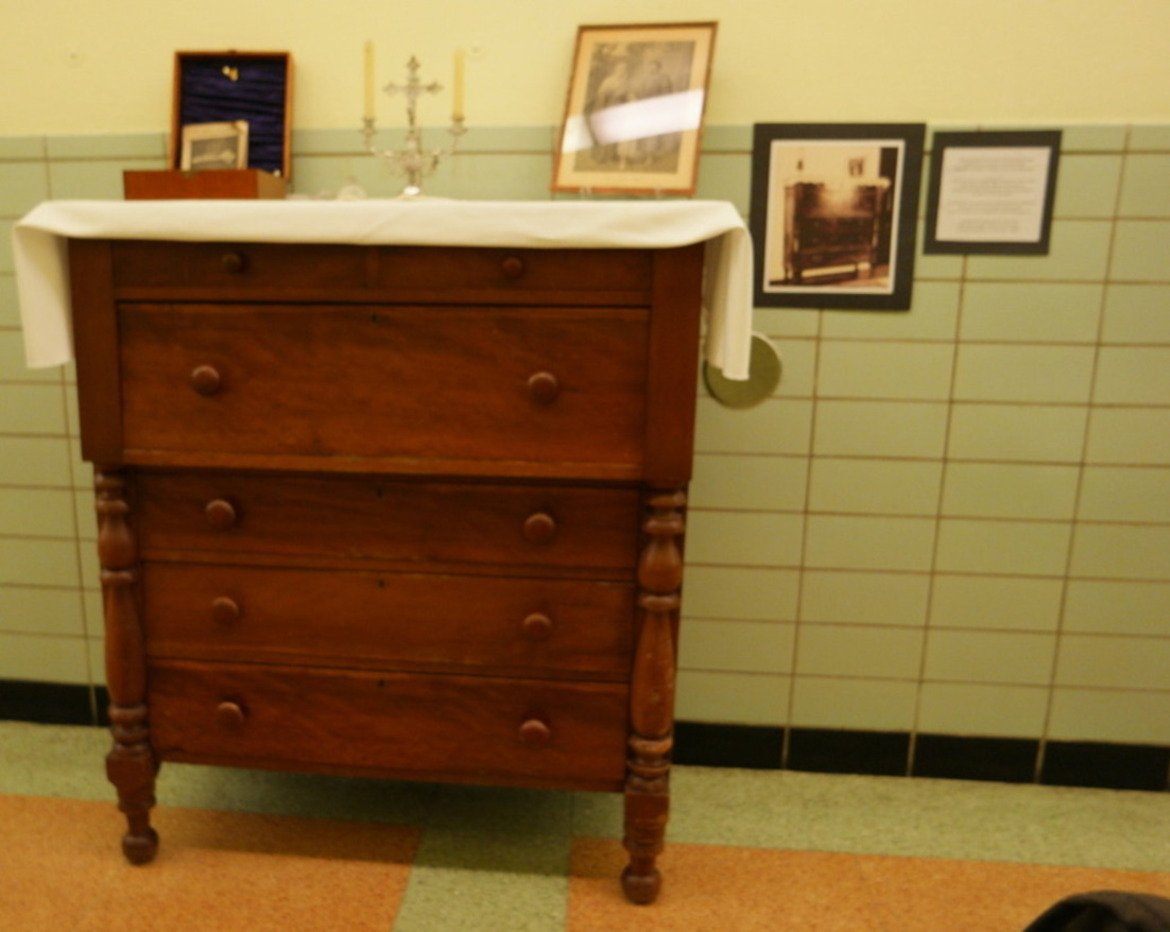
In the late 1820s and early 1830s, Catholic missionaries traveling through north-central Ohio often stopped in Mansfield to celebrate Mass with the growing number of Catholic settlers in the area. Without a dedicated church building, these early gatherings took place in private homes, where a simple bureau often served as a makeshift altar—a powerful symbol of the settlers’ devotion and determination to keep their faith alive on the frontier.
These informal visits laid the groundwork for a more organized Catholic presence. As the Catholic population steadily grew, so did the need for a permanent parish. In response to this need, St. Peter’s Parish was officially established in 1844, marking the beginning of a formal and lasting spiritual home for Catholics in the Mansfield area.
From those humble early gatherings, St. Peter’s would go on to serve generations of faithful, becoming a cornerstone of Catholic life in the region.
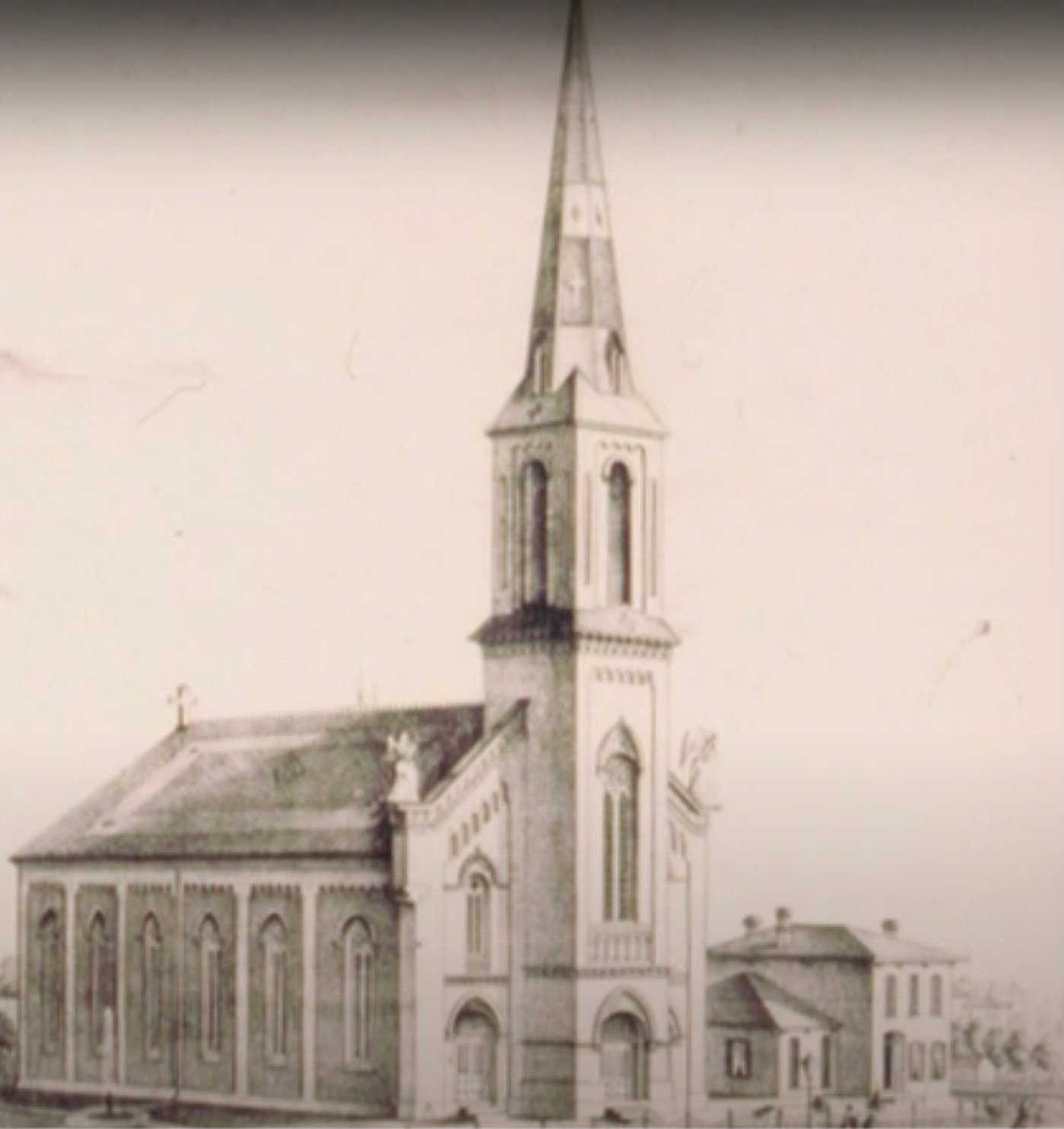
 A Growing Community: The First Church
The structure was adapted for Catholic worship—its steeple was topped with a ball and cross, and a bell was installed. In 1850, the first official Mass was celebrated in the building, marking the true beginning of a permanent Catholic presence in Mansfield. At that time, the parish served just 12 families.
 Tragedy and Resilience: The Second and Third Churches
As Mansfield’s population steadily increased in the late 19th century, St. Peter’s Parish experienced significant growth as well. By 1870, the parish had grown to include over 200 families, making it clear that the existing worship space was no longer adequate to serve the community’s needs. In response, the parish commissioned the construction of a new brick church, designed in the Gothic architectural style popular at the time. This new building was erected on South Mulberry Street and could accommodate approximately 400 parishioners, providing a spacious and inspiring setting for worship and community gatherings.
Over the next two decades, the parish continued to grow, reaching around 220 families by 1889. However, tragedy struck on April 4, 1889, when a devastating explosion and subsequent fire destroyed the church
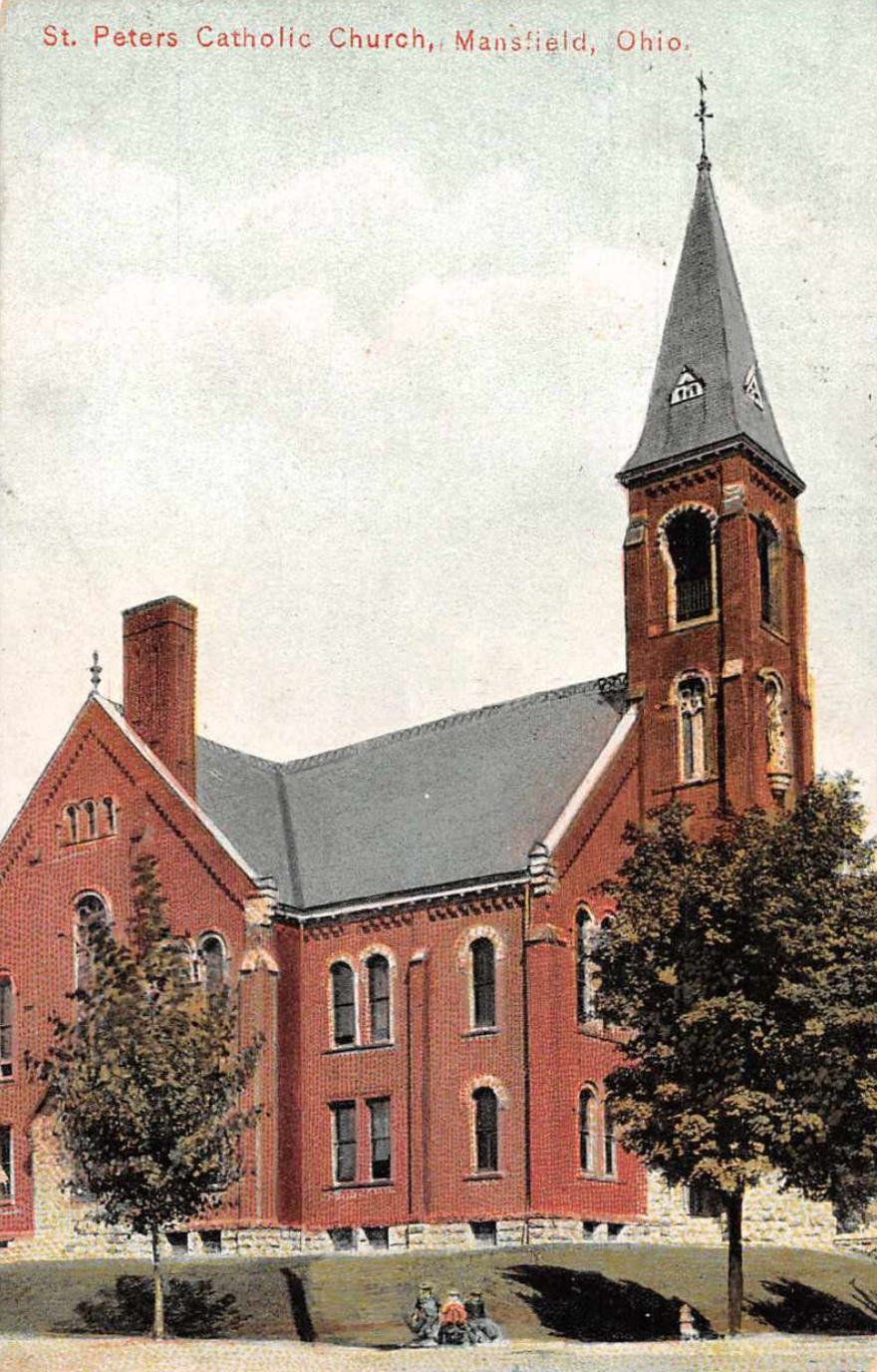 building. This heartbreaking event occurred just days before Palm Sunday, making the loss even more poignant for the parishioners. Despite investigations, the exact cause of the explosion was never determined, leaving the community to face the aftermath with resilience and faith.
In the immediate wake of the disaster, the parish quickly found a temporary place to gather: Masses were held at the Richland County Courthouse, ensuring that worship could continue uninterrupted. Recognizing the urgent need for a new church, the parish made the difficult decision to remove temporary school buildings on the church grounds to clear space for a new combined church and school facility.
The cornerstone for what would become the third St. Peter’s Church was laid in September 1889, just months after the fire. Construction proceeded rapidly, reflecting the determination and unity of the parish community. Exactly one year later, the parish celebrated the first Mass in the new church—a powerful testament to their unwavering faith and resilience in the face of adversity. This new building not only restored a place of worship but also strengthened the sense of community that continues to define St. Peter’s Parish today
 A New Era: The Present Day Church
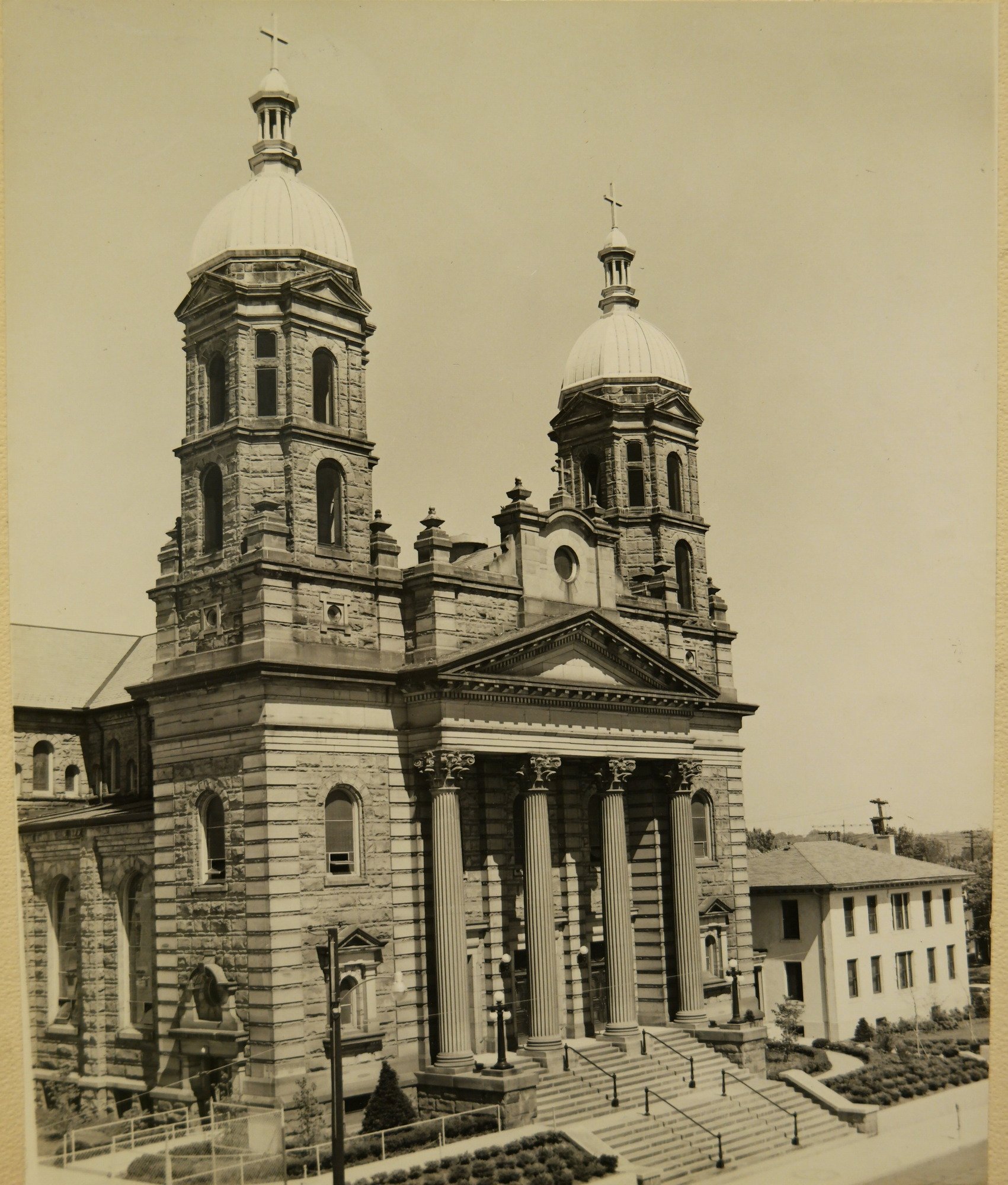
As St. Peter’s Parish grew into the 20th century, it became clear by 1906 that a larger church was needed once again. Land was purchased directly across South Mulberry Street from the previous building for what would become the fourth and present-day church.
The cornerstone was laid on May 14, 1911. Designed by William P. Ginther of Akron and built by Albert Burkhart of Columbus, the project cost just over $150,000—$100,000 for construction and $50,000 for furnishings. Though World War I delayed delivery of stained-glass windows from Emil Frei Art Glass Studios in Munich, the parish moved forward. The first Mass was held on September 12, 1915, and the church was consecrated on September 16, 1917.

By 1944, the parish was debt-free. To mark the 100th anniversary, the church underwent major interior decoration. Artist John Bernat was commissioned to create vibrant murals and ornate details over two years.
Following the Second Vatican Council, many of Bernat’s works were painted over in 1970 to reflect simpler liturgical designs. A 1992 fire caused further damage, leading to the loss of more original artwork.
In 2015, a successful $2 million campaign funded a full interior restoration and repainting—preserving the church’s historic character while renewing its sacred atmosphere for future generations.
-